Canada's climate makes heating and cooling a significant part of residential energy expenditure. Smart thermostats address this by scheduling temperature adjustments based on occupancy patterns, outdoor conditions, and utility rate schedules. For Canadian households, two additional factors shape the buying decision: compatibility with Canadian HVAC configurations and access to provincial rebate programs.
Canadian HVAC: What Makes It Different
Most Canadian homes use one of several heating configurations that differ from what's common in the United States. Forced-air gas furnaces are widespread in Ontario, Alberta, and British Columbia. Electric baseboard heating is prevalent in Quebec, where hydroelectric power has historically been inexpensive. Radiant heat systems and heat pumps are less common but growing in coastal regions.
The critical issue for smart thermostat compatibility is the C-wire (common wire). Most modern smart thermostats require a C-wire to power their electronics continuously. Many older Canadian homes were wired without one, particularly those with two-wire heating systems common in Quebec's electric baseboard setups. Devices without C-wire support — or those that include a power adapter kit — avoid this limitation.
Ecobee SmartThermostat
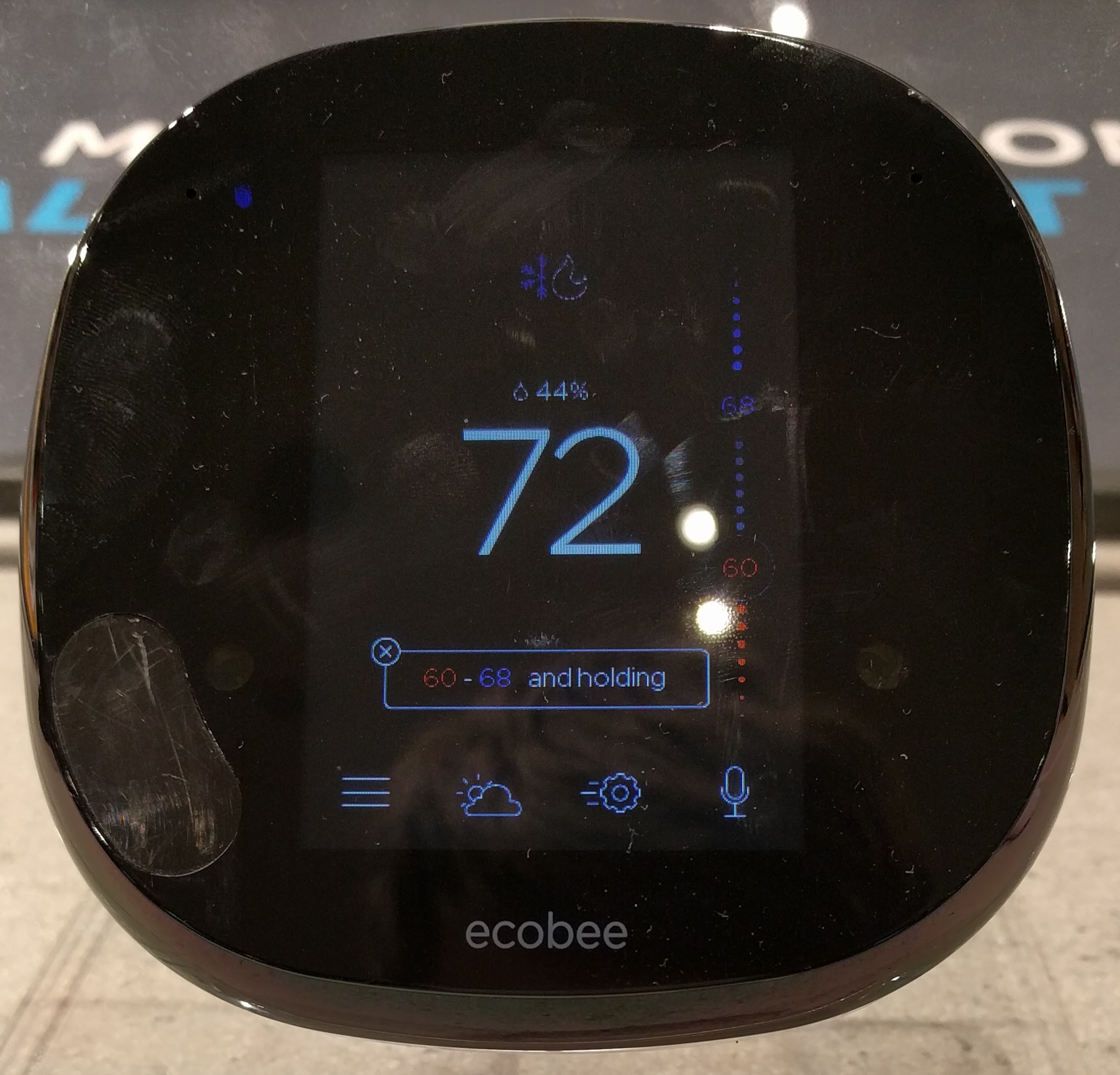
Ecobee is a Canadian company (based in Toronto), and its thermostats are designed with the Canadian market explicitly in mind. Ecobee devices ship with a Power Extender Kit that addresses the C-wire problem for installations where the wire is absent. They support most Canadian HVAC configurations, including multi-stage furnaces and heat pumps.
The SmartThermostat includes a built-in Amazon Alexa speaker, making it a voice-controlled device as well as a thermostat. It uses remote room sensors to average temperature across occupied rooms, which reduces the cold-room problem common in larger Canadian homes with multiple heating zones.
Rebate eligibility
Ecobee thermostats appear on eligible product lists for several provincial rebate programs. The specifics change year to year; checking directly with Natural Resources Canada's energy efficiency resources or your provincial utility is the most reliable approach. As of early 2025, utility programs in Ontario (through Enbridge Gas) and British Columbia (through BC Hydro) have included Ecobee models.
Google Nest Thermostat
Google's Nest Thermostat is available at Canadian retailers and supports a comparable range of HVAC types. Its standout feature is the learning algorithm that builds a schedule from manual adjustments over the first week of use, eventually anticipating when you leave and arrive home.
The Nest Thermostat (the current base model) does not require a C-wire because it charges itself from the heating or cooling wires when the system runs. This makes it a viable option for older Canadian homes where rewiring is impractical. The higher-tier Nest Learning Thermostat does require a C-wire on most systems.
Integration with Google Home
For households with Google Nest speakers or displays, the integration is direct. You can adjust temperature by voice, view energy history through the Google Home app, and set schedules remotely. The Nest Thermostat also integrates with utility demand response programs in some Canadian provinces, though this varies by province and utility.
Honeywell Home T6 Pro
Honeywell's T6 Pro is a more straightforward option that suits households that want smart scheduling without full ecosystem integration. It supports most North American HVAC configurations and installs similarly to a conventional thermostat. Its app is less feature-rich than Ecobee or Nest, but the device itself is reliable and has a longer track record in Canadian HVAC environments.
The T6 Pro is often recommended by HVAC technicians in Canada for its compatibility and ease of service. It does not require a C-wire in most two-wire configurations.
Provincial Rebate Programs
Several Canadian provinces and territories operate rebate programs for energy-efficient home upgrades, including smart thermostats. These programs change frequently in terms of eligible models and rebate amounts.
How to check rebate eligibility
Contact your provincial utility directly (Enbridge Gas, BC Hydro, Hydro-Québec, ATCO, etc.) or use Natural Resources Canada's Home Efficiency Rebate Plus program to confirm current eligibility before purchasing. Rebate values and program status change frequently.
Installation Considerations
Installing a smart thermostat is a task many homeowners complete themselves, provided they take appropriate precautions — primarily switching off the furnace breaker before disconnecting wires. However, Canadian building codes in some municipalities require that thermostat wiring changes be inspected or completed by a licensed electrician. Checking local requirements before a DIY installation avoids potential issues during a home inspection or insurance claim.
For homes with older Millivolt systems (common in wall-mounted gas heaters), standard smart thermostats are generally incompatible. These systems require specialist thermostats or an adapter.
Energy Monitoring and Reporting
Both Ecobee and Nest provide monthly energy reports through their apps. These reports estimate heating and cooling costs based on usage and local utility rates you enter manually. Ecobee's reporting is somewhat more detailed, breaking down usage by day and comparing it to similar homes. Neither device connects directly to Canadian utility billing systems to pull real-time rate data, though this type of integration has been discussed by some utilities.
| Device | C-Wire Required | Canadian Rebates | Voice Control | Room Sensors |
|---|---|---|---|---|
| Ecobee SmartThermostat | No (kit included) | Frequently eligible | Alexa built-in | Yes (sold separately) |
| Google Nest Thermostat | No (self-charging) | Sometimes eligible | Via Google Home | No |
| Honeywell T6 Pro | No (most configs) | Varies | Via Alexa/Google | No |